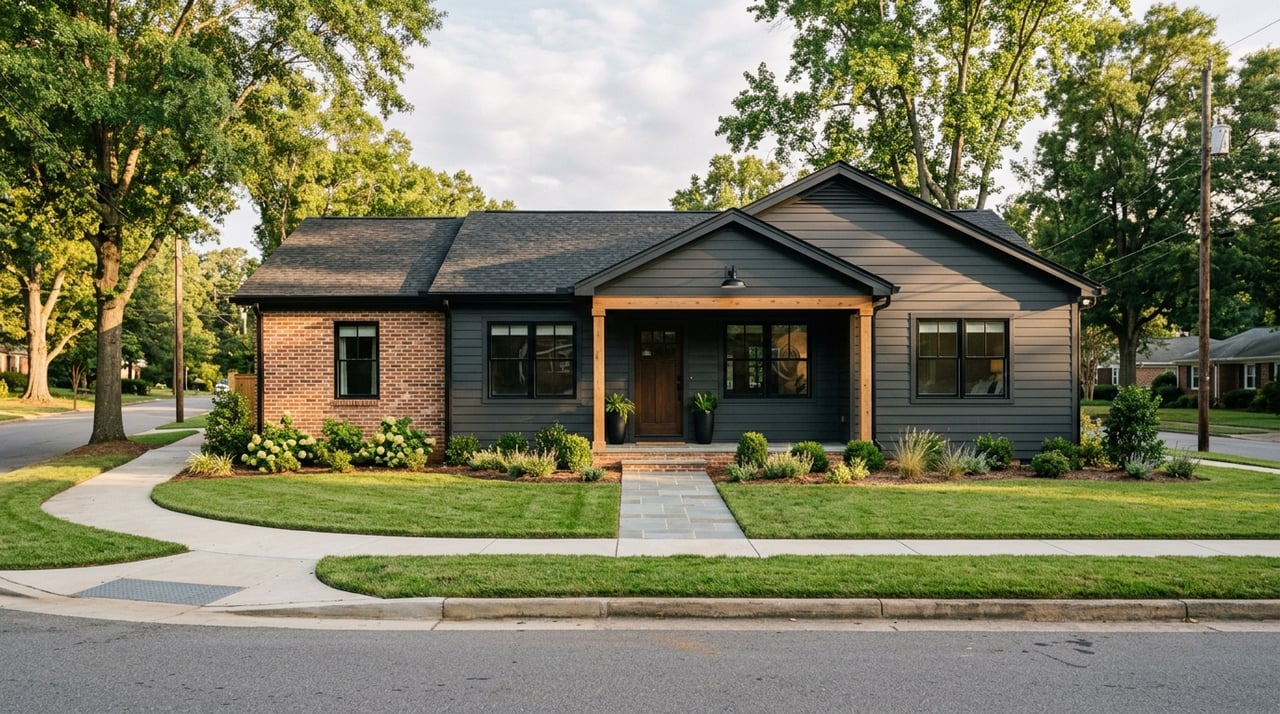
Wondering whether Applewood is the kind of place where you can buy smart, live well, and still find upside? You are not alone. Many buyers and investors look at Applewood because it offers established housing, larger lots, and a more space-focused value proposition than some closer-in Denver neighborhoods. This guide will help you understand what drives Applewood home values, where opportunity may exist, and how to think about the market with more confidence. Let’s dive in.
Why Applewood Stands Out
Applewood is a small Jefferson County census-designated place with 7,833 residents across 4.07 square miles, according to the U.S. Census. It is a largely owner-occupied market, with 76.2% of homes occupied by owners. That alone tells you something important: this is not a neighborhood defined by rapid turnover.
The area also shows strong household purchasing power. Census data reports a median household income of $130,545 and a median owner-occupied home value of $785,900. For buyers, that points to a market where people tend to buy for stability, lifestyle, and long-term value.
Applewood also has signs of an established local identity. The Applewood Business Association represents nearly 200 businesses, and Sustainable Applewood hosts community-oriented events like seed shares, bike parades, gardening classes, and paint recycling drives. For many buyers, that adds a layer of place-based appeal that goes beyond a home search spreadsheet.
Applewood Housing Stock
Applewood is still dominated by detached homes. Point2Homes reports that 70.4% of occupied homes are single-unit detached. That matters because detached housing often gives buyers more flexibility for layout changes, storage, outdoor use, and future improvements.
Much of the housing dates to the 1950s era. Public neighborhood guides describe midcentury modern ranches, split-level homes, brick ranches, and tree-lined streets with curving roads. You are often looking at homes with solid original bones, but not always with fully updated finishes.
That creates a very specific kind of opportunity. In Applewood, value-add potential often comes from kitchen and bath updates, cosmetic modernization, basement finishing, and system improvements rather than full redevelopment. If you are open to an older home with a plan, this can be a market worth watching closely.
Applewood Prices Require Context
One of the most important things to understand about Applewood is that pricing is boundary-sensitive. Different data sources show meaningfully different numbers depending on how Applewood is defined. That means broad averages can be useful, but they should never be your only guide.
As of April 2026, Realtor.com reported 36 homes for sale, 9 homes for rent, a median listing price of $995,000, a median sold price of $973,500, $337 per square foot, and 25 days on market for Applewood. Redfin’s narrower Applewood Valley data showed a March 2026 median sale price of $782,500 and 32 days on market. That is a wide enough gap to change your strategy if you are comparing options block by block.
For buyers, the takeaway is simple: comp selection matters. A home in one Applewood pocket may not line up neatly with a home in another. If you are evaluating value, renovation potential, or resale outlook, you need neighborhood-specific comparisons rather than one generic Applewood number.
What Buyers Should Watch For
If you are buying in Applewood for your own use, the first question is often whether you want move-in ready or value-add. Both exist here, and the pricing difference can be meaningful. Turnkey homes can command strong prices quickly, while older homes with unfinished spaces may leave more room for personalization.
Recent listing examples show this range clearly. A fully remodeled Applewood Valley home sold at $282 per square foot and 1% above list in just two days. At the same time, other Applewood homes are still marketed around renovation potential, unfinished basements, and larger backyards.
That means your buying plan should be clear before you start touring. If you want immediate convenience, you may pay a premium for updated finishes. If you are comfortable taking on improvements over time, you may find better long-term value in a structurally sound older home.
Good Fit for Move-Up Buyers
Applewood can appeal to move-up buyers who want more house, more lot space, or a more established residential setting. Census data also shows high educational attainment, with 98.9% of residents age 25 and over holding at least a high school diploma and 71.0% holding a bachelor’s degree or higher. That helps support the idea that many buyers here are making thoughtful, long-range housing decisions.
The commute profile also adds context. The Census reports a mean commute time of 22.6 minutes. For some buyers, that balance of residential feel and metro access is part of the draw.
Renovation Questions to Ask
Older housing stock can create upside, but only if you evaluate it carefully. Before writing an offer, it helps to think through where your budget will go and what improvements will actually support future value.
A few practical questions to consider include:
- Is the home mostly a cosmetic project, or will it likely need system updates?
- Does the basement offer usable expansion potential?
- Are you paying for someone else’s renovation, or creating your own equity through improvements?
- How do updated homes nearby compare on price per square foot?
- Does the lot and layout support the way you want to live in the home?
What Investors Should Know
Applewood can work for investors, but it is not a one-size-fits-all play. Because the market is heavily owner-occupied and dominated by detached homes, the strongest fit may often be long-term hold or value-add resale rather than a high-turnover rental strategy. That conclusion lines up with the neighborhood’s ownership pattern and housing mix.
Rental data also shows that product type matters. Census QuickFacts lists median gross rent at $2,211. Apartments.com reports average apartment rents of $1,457 for studios, $1,639 for one-bedrooms, $1,956 for two-bedrooms, and $2,411 for three-bedrooms, while Zumper estimates average house rent at $3,250.
For small-scale investors, that spread suggests detached homes can command a meaningful premium over apartment product. Still, rent potential should be weighed carefully against acquisition cost, renovation scope, and realistic holding timelines. In a market like Applewood, the details of the asset matter more than a headline rent number.
Where the Upside May Be
Applewood’s investment story tends to center on usable space and finish quality. Homes with unfinished basements, dated kitchens, or older baths may offer a path to increased value if the structure, layout, and location support the work. In many cases, the opportunity is not in building from scratch. It is in improving what is already there.
That can make Applewood especially interesting if you prefer a measured value-add plan. Instead of betting on extreme turnover, you may be looking for a solid home on a good lot where improvements can better align the property with today’s buyer expectations.
Applewood vs Closer-In Denver
If you are comparing Applewood to Denver neighborhoods, the biggest distinction is usually space versus proximity. Applewood often reads as a space-and-stability play rather than a pure walkability play. For many buyers, that tradeoff is worth serious consideration.
The price-per-square-foot comparison helps tell the story. In March 2026, Denver citywide showed a median sale price of $630,000 and $374 per square foot. Sloan Lake was $764,750 and $472 per square foot, while Washington Park was $1.475 million and $652 per square foot.
By comparison, the broader Applewood market showed a median sold price of $973,500 at $337 per square foot, while Applewood Valley came in at $782,500 and $282 per square foot. That does not make Applewood cheap. It does suggest that, in some cases, you may get more space for the money than you would in closer-in Denver locations.
How to Buy Smart in Applewood
Applewood rewards buyers who stay analytical. Because the market includes both updated homes and clear renovation candidates, it helps to know exactly which lane you are in before you make decisions. That clarity can protect you from overpaying for partial updates or underestimating the true cost of a project.
A smart Applewood search often includes these steps:
- Define whether you want turnkey, light updates, or a true value-add project
- Review comps by sub-area, not just broad Applewood averages
- Compare price per square foot with condition, lot size, and finished space
- Look closely at basement utility and future livable area
- Be realistic about renovation timing and budget
For investors, the same principle applies. The best opportunities are often the ones where the purchase price, improvement plan, and exit strategy all line up from the start.
Applewood is not a market where one headline number tells the whole story. It is an established detached-home area with neighborhood identity, renovation potential, and pricing that can shift meaningfully by pocket and product type. If you are looking for space, stability, and the possibility of long-term upside, Applewood deserves a closer look.
When you want help evaluating Applewood block by block, the right guidance can make a real difference. The New Perspective Team | Compass brings neighborhood-level analysis, data-driven advice, and high-touch support for buyers and investors across the Denver metro area.
FAQs
What makes Applewood appealing for homebuyers in Jefferson County?
- Applewood offers an established, mostly owner-occupied housing market, a high share of detached homes, and a space-focused alternative to some closer-in Denver neighborhoods.
What types of homes are common in Applewood?
- Applewood includes many detached homes, especially midcentury ranches, brick ranches, and split-level homes, with some townhome and apartment product in parts of the area.
What should buyers know about Applewood home prices?
- Applewood pricing can vary a lot depending on how the area is defined, so buyers should compare sub-neighborhood comps carefully instead of relying on one broad market average.
Is Applewood a good place to find renovation opportunities?
- Applewood can offer renovation potential through older homes with dated finishes, unfinished basements, and layouts that may support updates and expanded usable space.
What should investors consider about Applewood rental property?
- Investors should pay attention to product type, since detached houses appear to command higher rents than apartment product, and the area may fit long-term hold or value-add resale strategies better than high-turnover rental plans.
How does Applewood compare with Denver neighborhoods on value?
- Applewood often offers a different value equation, with lower price-per-square-foot figures than some closer-in Denver neighborhoods, which may appeal if you prioritize space over proximity.
