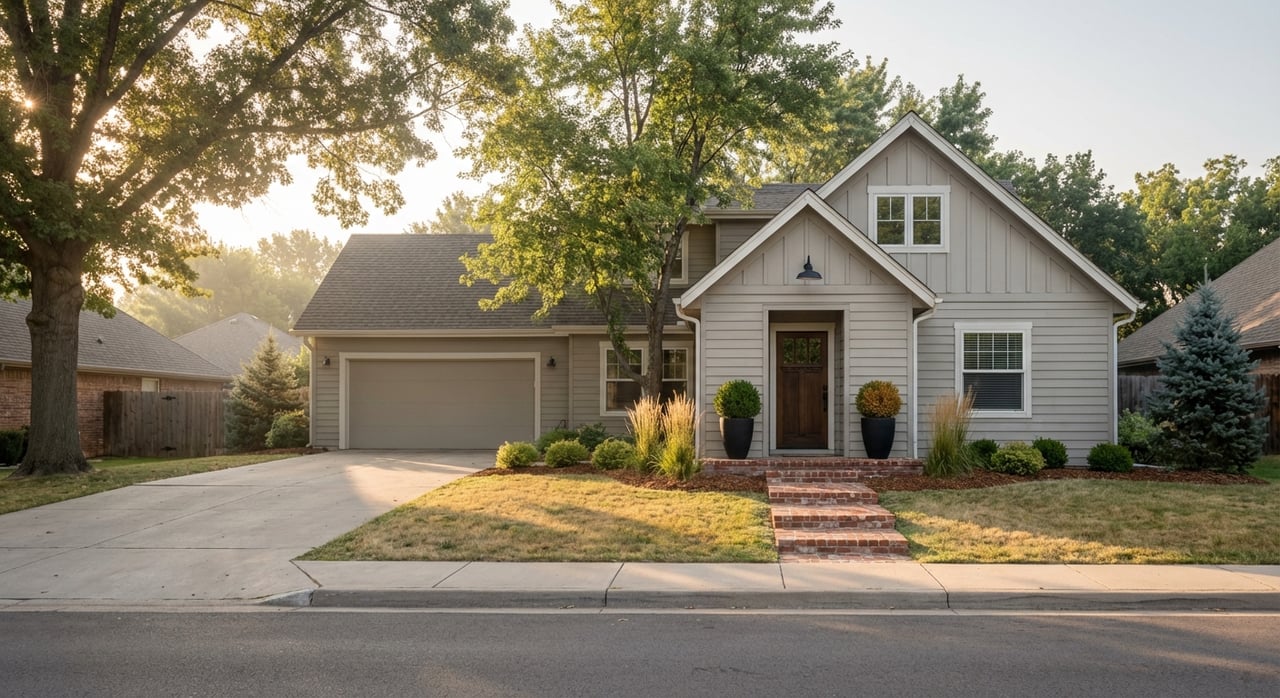
Outgrowing your Denver bungalow and craving more elbow room without giving up city access? You are not alone. Many buyers look west for bigger yards, mature trees, and quick trail time while staying close to downtown. In this guide, you will see why Applewood keeps showing up on move-up shortlists, what trade-offs to weigh, and how to verify if it is the right fit for you. Let’s dive in.
Applewood at a glance
Applewood sits about 10 miles west of downtown Denver on the edge of the foothills. It is an unincorporated community in Jefferson County, bordered by Wheat Ridge, Lakewood, Fairmount, and the Table Mountains. You get a suburban feel with easy access to city amenities. Learn more about the area’s setting on the Applewood, Colorado overview.
The housing stock reflects its postwar roots. Many subdivisions were built in the 1950s and 1960s, so you will see mid-century ranches, split-levels, and bi-levels, alongside newer infill and custom remodels. This history explains the prevalence of single-story living, large main-level footprints, and basements with walk-out potential.
Why move-up buyers choose Applewood
Larger lots, more privacy
If you are trading up from an urban lot, Applewood’s space can feel like a breath of fresh air. Many mid-century parcels fall in the suburban range, roughly 7,000 to 18,000 square feet. Pockets near the foothills and in named subdivisions can stretch close to an acre. Recent MLS examples show the range well, including one Applewood West ranch on about 0.40 acres and a Wide Acres Estates property near 0.93 acres. See a representative example from MLS on this Applewood listing detail.
The practical upside is simple: room for play spaces, gardens, accessory structures, or a future pool, plus more separation between you and your neighbors.
Mid-century homes you can tailor
Applewood’s mid-century base is a feature, not a bug, for many move-up buyers. You can find renovated ranches, expanded split-levels, and newer custom builds in the mix. If you like one-level living and modern updates, there is a lot to love. If you want to design your own layout, many original homes offer remodel or replacement potential. A regional study of Denver’s 1940–1965 subdivisions outlines the area’s ranch and split-level heritage, which matches what you will see in Applewood’s streetscapes. For context, review the historic subdivisions overview.
Trails, parks, and golf nearby
Outdoor time is easy here. North and South Table Mountain, both part of Jeffco Open Space, offer mesa-top loops, scenic ridgelines, and multi-use trails just minutes away. Check park details and seasonal notices on the Jeffco Open Space Table Mountains page.
Closer to home, the Prospect Recreation & Park District maintains community parks, fields, and programs that serve Applewood and nearby neighborhoods. For golf lovers and community events, the Applewood Golf Course is a long-standing, full-service local course.
Daily needs within minutes
You will find grocery, restaurants, and everyday services in and around Applewood, including the Applewood Grove and Applewood Shopping Center area. Many errands are a short drive, which keeps weekday routines simple.
School assignments vary by address within Jefferson County Public Schools. Examples in Applewood include Maple Grove, Stober, and Welchester at the elementary level, with high school assignments that can include Golden or Wheat Ridge depending on parcel. Always verify a specific home’s boundary on the Jeffco Public Schools articulation areas map.
Commute flexibility
Driving access is straightforward thanks to the I-70 and West 32nd corridor. If you use transit, the RTD G Line terminates at the Wheat Ridge/Ward station. Many Applewood residents drive to that park-and-ride, then ride about 25 to 30 minutes to Union Station depending on schedule. See route details on the RTD G Line overview.
Market snapshot and pricing approach
Applewood spans several micro-neighborhoods, and different data providers draw different boundaries. As a result, price medians vary by source and month. In late 2025, some aggregators showed median listing prices above 1.1 million dollars, while others ranged from the mid six figures into seven figures. Treat those numbers as directional only.
For a home you are considering, the best guidance is recent MLS comparables for that block or subdivision. That will account for lot size differences, remodel quality, and the mid-century versus new-build mix that can swing value.
Trade-offs and what to check
Every neighborhood has trade-offs. In Applewood, these tend to be practical and addressable when you plan ahead.
- Price and market definition. Because boundaries vary across platforms, use recent, local MLS comps for precise pricing. Do not rely on broad aggregator medians for an offer strategy.
- Property taxes and special districts. Applewood falls within local special districts, including the Prospect Recreation & Park District, which levies a mill for operations. Tax bills vary by parcel. Review assessed value, mill levies, and any water or sanitation district fees before you offer.
- Wildland interface and insurance. Parcels close to open space or the foothills may require defensible-space planning. Ask insurers for early quotes, confirm underwriting limits, and ask about mitigation credits. For context on local open space conditions, see South Table Mountain Park.
- Transit trade-offs. Drivers have good east-west access. Direct, frequent rail is not door to door from most homes, so plan on a short drive to the G Line or bus connections.
- HOA and parcel rules. Much of Applewood is unincorporated, and many streets have no HOA. Some pockets and newer subdivisions do have covenants. Always verify HOA status, CCRs, and fees for the specific listing.
A day in the life if you live here
Morning routines feel manageable. School drop-off is close, and commuters can head toward I-70, Wadsworth, or US-6, or drive to a G Line park-and-ride. Confirm exact school boundaries for your address on the Jeffco Public Schools articulation areas page.
After school, you have options. Between Prospect Recreation & Park District programs and local fields, it is easy to fit in sports and activities. If you prefer quick nature time, an evening walk on the Table Mountain trails can be 10 to 15 minutes away by car.
On weekends, grocery runs and errands are close by, and Golden’s downtown and Clear Creek paths are an easy outing. With trails and golf nearby, staying active does not require a long mountain drive.
Your Applewood due diligence checklist
Before you put Applewood on your short list, run through these steps so you can make a confident offer.
- Verify school boundaries for your exact parcel on the Jeffco Public Schools articulation areas map. Assignments can vary across streets.
- Pull parcel details from Jefferson County assessor and tax records. Confirm lot size, assessed value, and current-year tax bill for the address you are considering.
- Check special districts. Review the Prospect Recreation & Park District and any water, sanitation, or fire district levies that may apply to your parcel.
- Test your commute. Drive your actual route at your normal times. If you will use transit, time the drive to the nearest G Line station and check schedules on the G Line overview.
- Evaluate lot usability. Confirm usable yard area, setbacks, topography, and drainage. If you plan additions, check Jefferson County planning and permit history. MLS lot notes are a starting point, and examples like this Applewood listing detail show how parcel data is presented.
- Get insurance quotes early. Ask carriers about wildfire exposure, mitigation credits, and any underwriting limits. For local context on open space and seasonal conditions, see South Table Mountain Park.
Ready to explore Applewood?
If larger lots, established trees, and easy outdoor time are on your wish list, Applewood deserves a look. The mix of renovated ranches, roomy split-levels, and newer customs gives you options, whether you want move-in-ready or a home you can tailor over time. With a clear plan for taxes, insurance, and commute, you can move up with confidence.
When you are ready, reach out for neighborhood-level pricing, on-market and coming-soon options, and a step-by-step path from your current home to your next. Connect with the New Perspective Team | Compass to Request Your Complimentary Market Consultation.
FAQs
What types of homes are common in Applewood?
- You will mostly see mid-century ranches, split-levels, and bi-levels from the 1950s and 1960s, along with renovated homes and newer custom builds informed by that heritage.
How far is Applewood from downtown Denver?
- Applewood sits about 10 miles west of downtown Denver, offering a suburban setting with quick access to city amenities.
Are there public transit options to Union Station from Applewood?
- Yes, many residents drive to the Wheat Ridge/Ward G Line station, then ride about 25 to 30 minutes to Union Station depending on the schedule.
How big are typical Applewood lots compared with central Denver?
- Many Applewood parcels range from roughly 7,000 to 18,000 square feet, with some near an acre, which is larger than many inner-city lots.
What should I know about Applewood schools and boundaries?
- Applewood homes feed into Jefferson County Public Schools, but assignments vary by address, so verify the exact boundary on the district’s articulation areas map.
Are HOAs common in Applewood?
- Much of Applewood is unincorporated with limited HOA coverage, though some pockets and newer subdivisions have HOAs, so always confirm CCRs and fees for each listing.
